Study prepared within the framework of the Research Chair founded by AMDETUR at Anáhuac University Cancún, with the purpose of offering a comprehensive vision on the strategic relevance of Vacation Ownership in Mexico.
Importance of Vacation Ownership and Timeshare in Mexico
Vacation ownership has experienced sustained growth in Mexico since its introduction in the second half of the 20th century, establishing itself as one of the main subsectors of the national tourism industry.
This model has been a key driver for the development of tourist destinations such as the Mexican Caribbean, Los Cabos, Puerto Vallarta, and the Riviera Nayarit, among others, contributing to the diversification of tourism offerings, the generation of formal employment, and the promotion of direct investment in the tourism real estate sector.

Objective of the study
To document the magnitude and economic impacts of Vacation Ownership in Mexico, highlighting its contribution to Tourism GDP, its capacity to generate specialized jobs and its role in promoting long and stable stays throughout the year.
Impact of Vacation Ownership in Mexico
Results that reflect the economic and social importance of the sector.
The study’s results show that vacation ownership plays a significant role in national tourism, driving foreign exchange earnings, investment, and job creation at various levels.
Its performance confirms that this model continues to offer ample opportunities for strengthening through modern institutional frameworks and sustainable practices.

$6.2 billion USD in net sales
Related to the marketing of Vacation Ownership products in Mexico.
$2.2 billion in additional sales
Generated by the use of memberships and complementary services.
$8.4 billion USD in total production value
Reflecting the magnitude of the sector within the national tourism economy
$6.3 billion USD in foreign currency
Equivalent to 23.1% of foreign exchange earnings from air tourism.
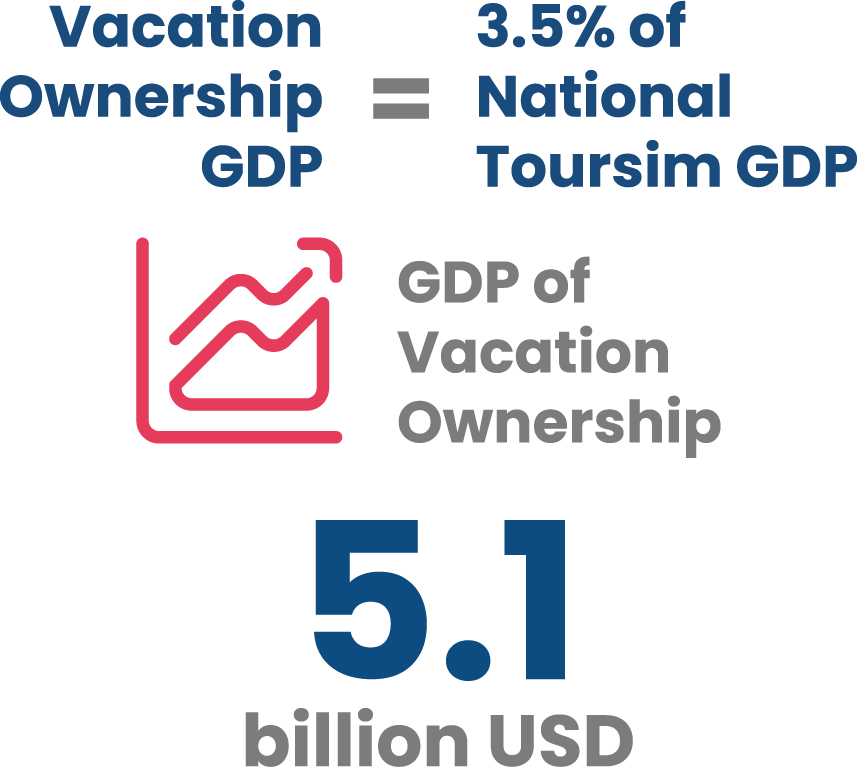
3.5% of the National Tourism GDP
Provided by the Vacation Ownership.
76% of sales
They correspond to international buyers (mainly from the USA and Canada).
22,813 rooms occupied daily
This represents more than 8.3 million nights per year. 22,813 rooms occupied daily
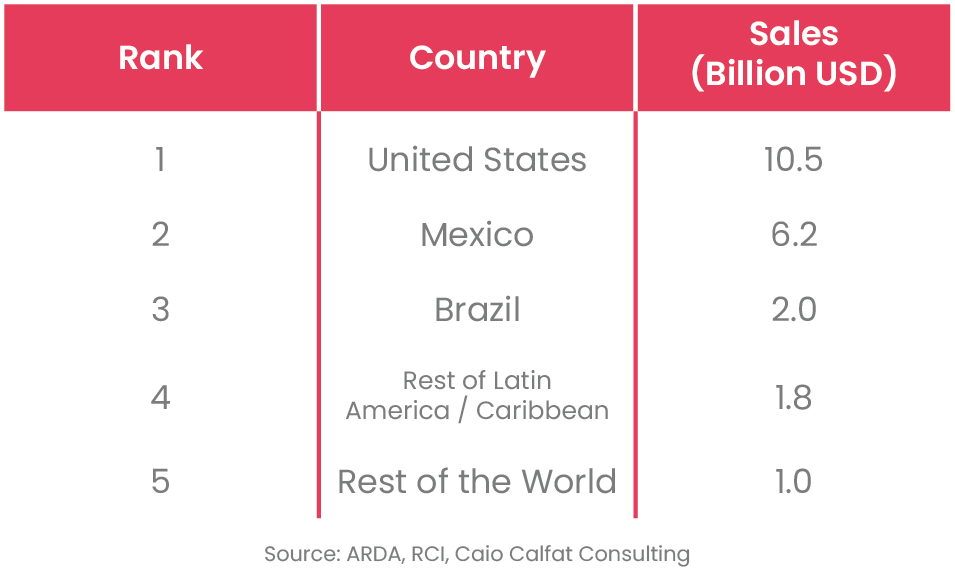
Mexico ranks 2nd in the world
In terms of Vacation Property sales.
Visual indicators of the study
Comparative charts and data prepared by STARC for AMDETUR.
This gallery presents some of the charts included in the study, illustrating the sector’s evolution, its contribution to Tourism GDP, and the distribution of offerings by destination.
These visual indicators highlight the role of Vacation Ownership as an essential component of tourism in Mexico, generating investment, employment, and shared prosperity.
Its performance confirms that this model continues to offer significant opportunities for strengthening through modern institutional frameworks and sustainable practices.
Countries with the highest annual sales of vacation ownership properties in 2024
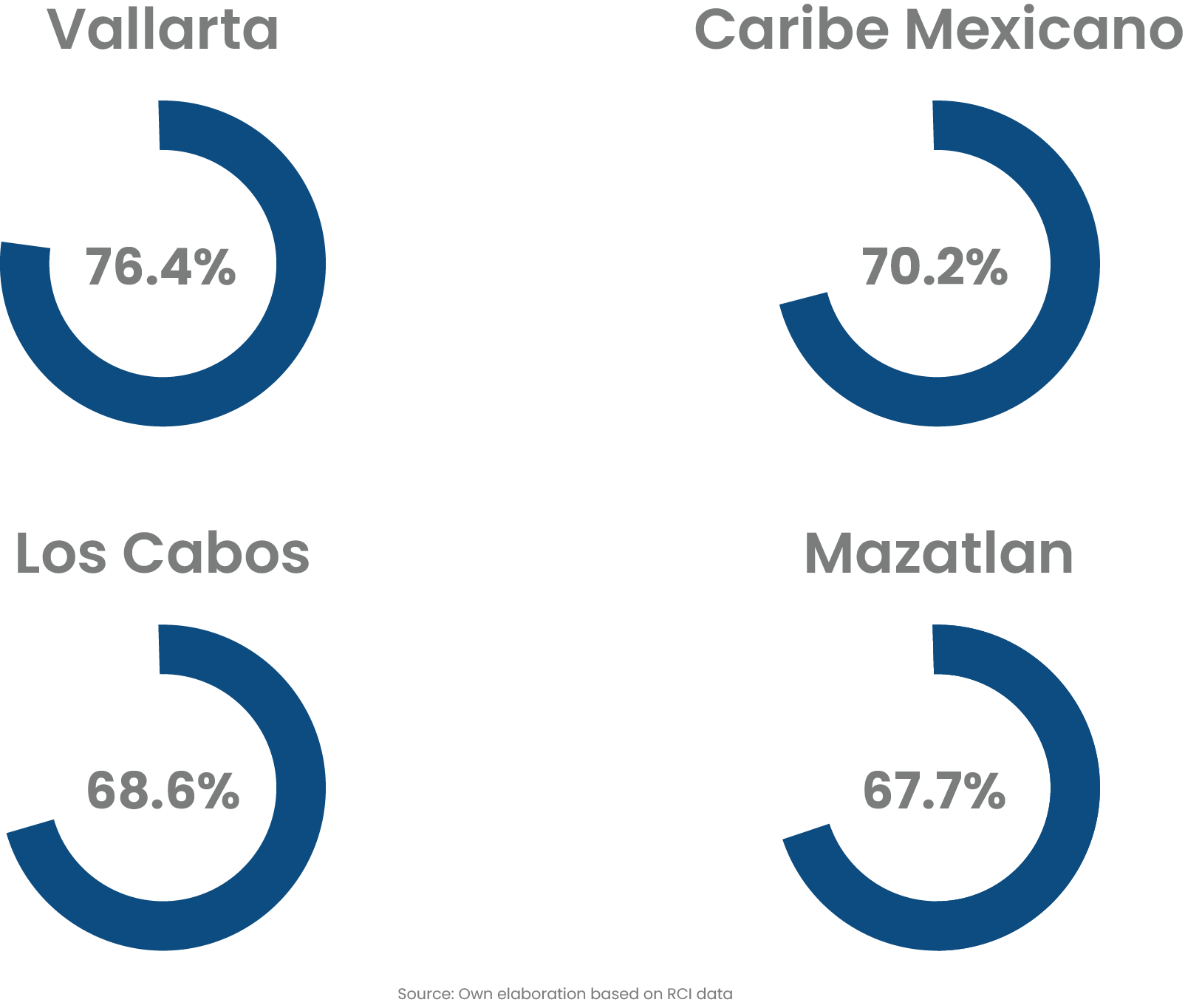
Destinations with the highest penetration of Vacation Ownership
Contribution to GDP and gross value of production